“It is the best and the most exciting job in the world, bringing the greatest game here.”
Phil Woosnam, 1977
How did a modest secondary school maths teacher from the Welsh countryside find himself for fourteen years at the helm of the legendary North American Soccer League (NASL), turning it into a spectacular attempt to establish European football in the landscape of professional sports in the United States?
Half a century after these events, and despite the nostalgia with which American fans remember the heyday of 1970s US soccer, the career and achievement of Phil Woosnam (1932-2013) are little known, if not forgotten. But his contribution to the history of football was far from negligible, and the biography of this “missionary” of the European game, tirelessly preaching the gospel of soccer to a transatlantic tribe of non-believers, deserves a just reappraisal.[1]
Our article starts with a brief recap of Phil Woosnam’s life and career before his move to the United States, then reinterprets his achievements as commissioner of the NASL in the light of relevant concepts from the field of international relations and diplomacy studies, before concluding on a re-evaluation of his remarkable legacy.
Teaching maths or playing football?
Nothing predestined the young boy from the village of Caersws to become a transatlantic missionary.[2] He did not even consider, despite his obvious talent as a footballer, a professional career in the game, but decided to remain an amateur during his military service with the Royal Artillery based initially at Aldershot (1951-53) and his studies at the University of Bangor, from where he graduated with a degree in Physics before starting as a maths and physics teacher at Leyton County High School for Boys in East London. It is only in 1957, at the age of 24, that Woosnam turned professional, but he continued teaching for another year and a half before signing for West Ham United, a month after winning his first cap for Wales.
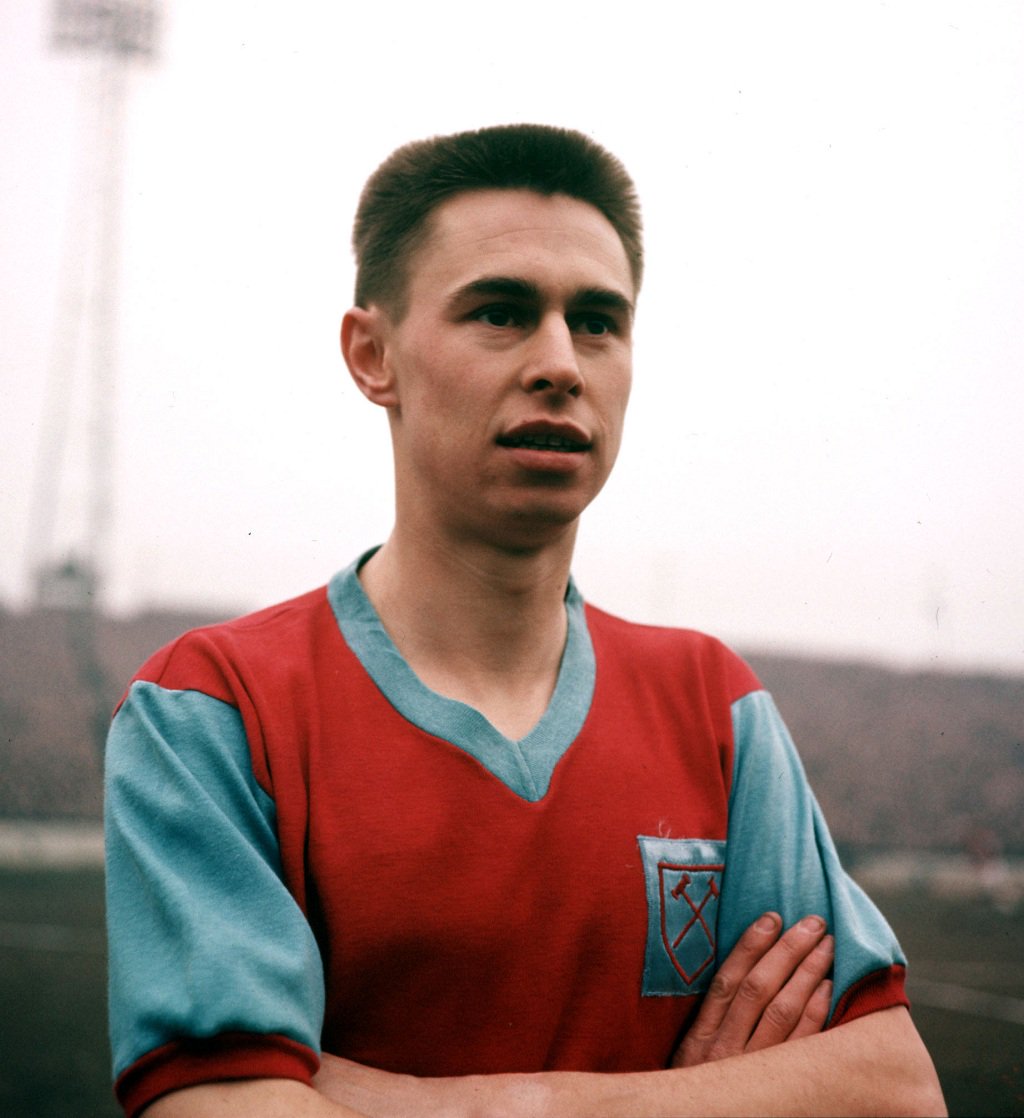
At West Ham, Woosnam benefitted from his integration into a squad that included several senior players who were keenly exploring training innovations, adding strength-based fitness regimes such as weight-training to traditional anaerobic methods, embracing a growing recognition of the importance of diet and nutrition, and even changing the material of playing kit and wearing more lightweight boots.[3]
When Ron Greenwood was appointed as manager in 1961, he felt that Phil Woosnam, with his strong views on how football should be played and his intellectual approach to coaching, was a threat to his authority, all the more so as Woosnam had been caretaker manager for a few games before Greenwood’s appointment and had expressed his own interest in the job to the West Ham board.[4] As a result, Woosnam (whose high re-sale value would go a long way to helping to fund the newly installed Upton Park floodlights), was transferred to Aston Villa in 1962.[5] His contract included indeed coaching responsibilities under the management of Joe Mercer.
Woosnam’s time in Birmingham was a frustrating one, and the interest manifested by continental clubs from Spain and Italy thanks to his performances with the Welsh national team did not come to fruition. He did, however, progress as coach, visiting countries like Zambia or Romania to provide advice on coaching and coach development. Due to his eloquence and intellectual capacities, he also was increasingly approached by the press for all kinds of comments on matters to pertaining to the game: falling crowds, player discipline, refereeing standards, player salaries.
In 1963, he had his first encounter with the US soccer authorities when the United States Soccer Football Association (USSFA) asked the FA to recommend any of its coaches to become the US’s Director of Coaching with responsibility for organizing coaching in schools and universities and to help grow the game.[6] Woosnam was one of the names it put forward. He was only 30 years old.
But it was in 1966 that a sliding doors moment happened that would change not only the course of Phil’s life and career but the course of football in the United States. Woosnam read a Daily Express article by English journalist Clive Toye about plans to set-up a new soccer league in the US. He reached out to Toye to find out more about the venture and to express his interest in potentially getting involved. With two rival leagues hastily set up and racing to launch first, time was of the essence. Very quickly Woosnam had been visited in London and had made a reciprocal trip to New York where he eventually agreed to join the Atlanta Chiefs, a brand new club developed under the umbrella of the Atlanta Braves baseball franchise that had only recently relocated from Milwaukee to Georgia.
Cultural mediators and non-state-sporting actors
The conceptual framework of sport diplomacy, previously mainly focused on the use of sport by nation states in pursuit of their foreign policy objectives, including their interaction with sport’s powerful global actors like FIFA or the IOC, has undergone a significant extension and differentiation over recent years. Traditionally, sport diplomacy dealt with individual nations’ projection of cultural attractiveness as major sports power or as generous host of successfully staged sports mega events, with the aim of both influencing a global audience and generating social cohesion domestically. Additionally, a few cases of sport used as “icebreaker” in post-conflict configurations, such as the famous “Ping-pong diplomacy” of the Nixon administration in the early 1970s in its rapprochement with the People’s Republic of China, have also been analyzed in a large variety of publications.
Today, however, as scholars like Stuart Murray or Simon Rofe have convincingly demonstrated, sport diplomacy is conducted in numerous forms by a vast array of “non-state-sporting actors” of different clout and influence, from the big sport federations and leagues to relatively small NGOs and not-for-profit civil society organizations, or even individual athletes or sportspeople in the largest sense, who carry out transnational projects in various forms and use sport to establish contact and exchange between culturally different communities.
In his comprehensive conceptualization of sport diplomacy, Stuart Murray dedicates an entire section to the emergence of non-state-sporting-actors and the sheer diversity of their missions and initiatives, while the more case-study oriented method adopted by Simon Rofe provides insight into how different actors seize the unique diplomatic opportunities that sport offers.[7] Their new approach to sport diplomacy ties in with the emergence of the concept of “public diplomacy” a few decades ago, focused first on governmental efforts to reach and influence international audiences directly, but increasingly including “people-to-people dialogue” engaged by non-state actors.[8] In Europe, the influential “International Sport and Culture Association” (ISCA) has even successfully imposed the concept of “grassroots sport diplomacy”, referring to transnational activities by civil society sport networks.[9]
This recent burgeoning of new empiric and scholarly approaches to sport diplomacy as an (exciting) object of studies “invite”, as Alan Tomlinson formulates it, “a reconsideration of the key individuals and the nature of their networks in the history, politics and sociology of sport cultures and institutions.”[10] An invitation, which our article is happy to accept.
Finally, sport diplomacy, especially when it comes to the study of individual actors, also benefits from the growing legitimacy of popular culture as relevant, previously under-researched field in international relations. Considering that the historical study of the long French-German reconciliation process has far too much concentrated on the role of political leadership and diplomacy, scholars have recently called for an overdue “enlarged definition of the concept of mediator.”[11] In a seminal article, historians Dietmar Hüser and Ulrich Pfeil have conceptualized this definition, distinguishing between “intentional” and “non-intentional” cultural mediators, including both organizations and individuals.[12]
Applied to football, arguably one of the most popular forms of popular culture, this distinction covers both events and initiatives set up with the intention to reach out to foreign audiences (most often in good will) and non-intended (both positive and negative) effects of the game and its actors on reciprocal perceptions between different cultural areas.[13] Hüser and Pfeil call in particular for the study of “personalities, who understand themselves as go-betweens, with the desire to build bridges between cultures, who see themselves as transmitters of overarching supra-national values and promoters of mutual understanding for the other side.”[14]
Their definition fits Phil Woosnam’s action and self-perception like a glove, and so does the list the authors supply of the qualities required to function as mediator through popular culture: intercultural sensitivity, an empirical experience of both cultures, linguistic competence, credibility through recognized functional expertise in their field, and a minimum of pedagogical skills.[15] The following sections analyze Woosnam’s practice before, during, and after the key period of his long mandate at the head of the NASL (1969-1983), in the light of the conceptual framework outlined above.
Adapting to a different world
Nobody is born an accomplished cultural mediator. Arriving in a very different cultural environment requires a period of mental adjustment, cognitive learning, and active acculturation efforts.
Woosnam arrived in Atlanta in 1966 and together with Vice-President Dick Cecil quickly set about building a squad in time for the start of the NPSL season the following March. They resolved to recruit only players conversant in English, not out of nationalistic or linguistic chauvinism, but on the pragmatic grounds that it would take time enough for a newly-assembled squad to gel.[16] As a result, they scouted in Britain and Ireland, the Caribbean, and southern Africa, including Zambia where Woosnam had cultivated links from the two summer coaching residencies he spent there in 1963 and 1964.
It is by no means exaggerated to see Phil Woosnam’s two seasons with the Atlanta Chiefs as a life-changing period of formation of deep-reaching intercultural awareness. Very quickly, he understood that familiarizing the American public with soccer would be a long and arduous task and require particular efforts well beyond the stadium. Soccer historian David Wangerin quotes him saying “This is a challenge to me, an opportunity to return something to the game. We’re really spreading the gospel now.”[17]
Obviously, sporting success helped, and the fact that after a satisfying, though not spectacular first season, he led the Chiefs to the city of Atlanta’s first ever national sporting title in 1968, while being honored by the league as “Coach of the Year”, gave him a good deal of name recognition and put him in a position where his voice was heard. At the same time, the two years had offered him much more than just success on the field. They had given him precious insight into the American sports culture on all levels, from basic popular practices and preferences to the functioning of professional sports leagues, and they had provided him with precious first-hand practical experience and opportunities to test ideas.
To start with, he showed a canny understanding of the American media’s ignorance with the strange European game, displaying incredible patience with reporters from both print and broadcast media in his explanations of some of the very basic elements of soccer: its tactics, its cultural motifs and its lexicon. Another stakeholder group he was also very attentive to was the “Booster Club”, a quasi-independent supporters group, whose members still remember his availability and his encouragement to players and their families to socialize with supporters after games.[18]
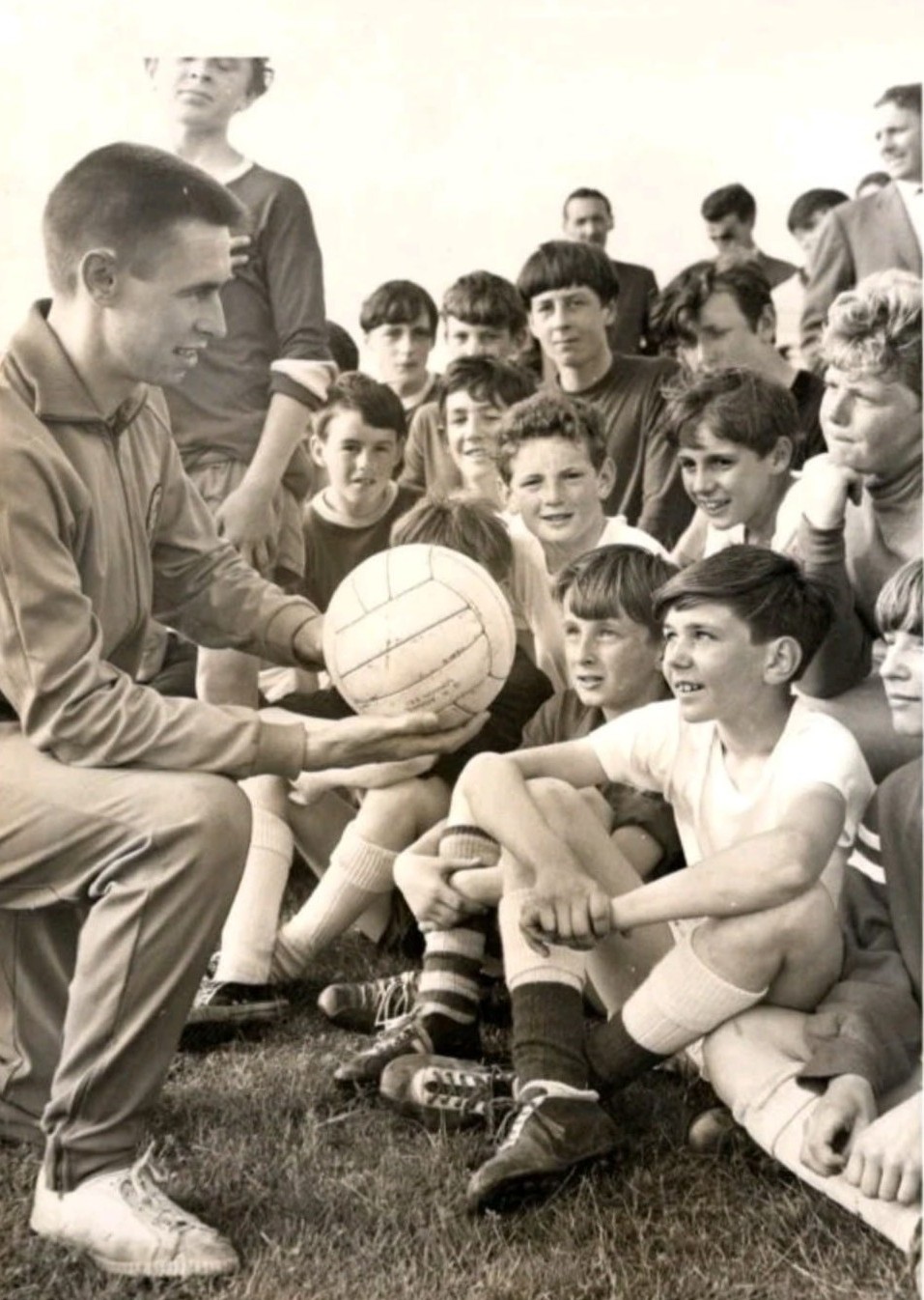
Arguably the most impactful development was, however, the program of children’s “coaching clinics” introducing school kids to the game, which Woosnam and the Chiefs’ Vice-President Cecil insisted on holding all across Atlanta (and beyond) right from day one. So committed to them were they that it was written into players’ contracts that they would run clinics in schools, with community organizations and faith groups, offering thousands of young Georgians the opportunity to taste soccer for the first time.[19]
What comes to the fore in each of these simultaneous actions and developments is Phil Woosnam’s grounding as a man of science and as a teacher, endowed with a high level of both cognitive and emotional intelligence. His ability to break concepts down for lay people to understand, his patience in explaining and re-explaining things, his capacity to change perspective, and his view that teaching was a process to which learners contribute themselves and which reflexively involves the teacher also growing in their own understanding – all these competences, paired with his natural enthusiasm for football and personality traits like an unwavering optimism, a certain stubbornness, as well as “inexhaustible diligence and superb organizational skills,” provided him with the assets to play the role of an eminent sports diplomat and mediator between two cultures.[20]
When he was entrusted, at the end of 1968/beginning of 1969 with the double task of bringing, as head coach, the USA men’s national soccer team back to life and rescue, as newly appointed Commissioner, the NASL from a sudden death after the number of franchises had gone down from seventeen to only five teams, he had ample opportunity to put all his qualities to the test.
What does it take to become a soccer diplomat?
In 1972, Woosnam published a short instructional book as part of a long-running series published by Sports Illustrated.[21] It is an introduction aimed at a public unfamiliar with soccer, with a focus on the basic elements of the game: the positions, laws, pitch dimensions, as well as the principal aspects of technique such as ball control, passing and heading.[22] But it also provides an insight into Woosnam’s awareness of the deep and strong attachment among his potential readers to “the familiar pattern of American sports.”[23]
Clearly, soccer was not part of that pattern, and once appointed Commissioner, Woosnam set himself the very ambitious goal, beyond ensuring the mere survival of the NASL, of integrating soccer in the landscape of sport in the USA.
Understanding the very position of the commissioner, perfectly unknown in traditional European sports governance, already requires an effort of intercultural adaptation to American business practices. A commissioner, in short, is the top executive of a professional sports league in the United States, in charge of administration and competitions, integrity and conflict resolution, commercial strategy and league expansion, revenue-sharing mechanisms and labour relations, as well as representation and external relations. In other words, the commissioner is the brain and the voice of the league, explicitly pursuing the common interest.[24]
Woosnam steered what was left of the NASL through two very complicated seasons before his indefatigable efforts to convince potential investors of the long-term interest in launching a professional soccer team paid off, especially with franchises in New York, Montreal and Toronto as of 1971, followed by an expansion to the West in 1973 (Los Angeles, San Jose, Seattle, and Vancouver).
This article has, obviously, neither the aim nor the scope to recapitulate the history of the NASL, from the arrival of Pelé at the New York Cosmos in 1975, which triggered a massive increase in public interest and stadium attendance, to its relatively quick decline at the beginning of the 1980s, when Woosnam’s strategy of league expansion aiming at maximum territorial coverage started to be identified by impatient investors as the main cause of the league’s lack of profitability, resulting in his “scapegoating” and removal by the franchise owners by early 1983.[25]
Whether they were right to blame him or not will remain a question for debate.[26] What the literature on the NASL’s short and intensive history, as well as different archives and testimonies, converge to show very clearly however, is the extent to which Woosnam’s work as commissioner, his attitudes and actions, constitute a fascinating trajectory of an unexpected, yet fully intentional, cultural mediator and impactful non-state sporting actor.
Woosnam was aware that in his endeavor to make soccer a major sport in the United States he was facing a long uphill struggle. Not only against the reluctance of television and the print media to offer soccer an opening on a national market perceived as “frozen” and “saturated,” but also against the structural weaknesses of soccer’s organization in the United States, burdened with a historically feeble national federation riven with factionalism, the absence of soccer-specific infrastructure, an unimpressive presence as college sport, and disorganized lower leagues. [27]
But most of all he had to fight against prejudice. By the 1960s, soccer had all but disappeared as a spectator sport in the United States. After a relatively prosperous period in the 1920s, it had increasingly been identified as an essentially non-American sport, a preserve of some ethnic groups, a British game to which mainstream media and the largest part of the population were indifferent or outright hostile. As USMNT international Marcelo Balboa, who grew up in southern California in the 1970s, recalls: “I used to get teased all the time about playing soccer.[28] His colleague Tom Wadlington put it a bit more coarsely: “They called us pussies and shit like that.”[29]
Pursuing an objective of cultural change requires not only a firmly anchored belief in one’s mission and an unshakeable positive mindset, but also a high level of frustration tolerance and a good deal of resilience against ignorance and bad faith. Judging by the adjectives used to describe Phil Woosnam by press portraits, soccer historians, and obituaries, he was well endowed with these qualities. At the height of his career, the Christian Science Monitor found the commissioner “affable”, “intelligent”, and “persuasive,” much like reporters in Birmingham and London did from his playing days in England.[30] Meanwhile, Sports Illustrated highlighted his “passion”, “tenacity”, and “doggedness.”[31] Years later, David Wangerin recalls his outstanding “enthusiasm, optimism and energy,” while his former partner in Atlanta, Dick Cecil, remembers him as “hard-headed, very focused, and tough in negotiations,” and obituaries in The Times or The Guardian as “passionate” and “visionary.”[32] Albeit hand-wringing about Woosnam’s limitless optimism, which at times appears somewhat disconnected from reality, Ian Plenderleith describes him as “brilliant, industrious, tireless”, and comes to the conclusion that his “innovative” and “pioneering” action was, more than once, “decades ahead of his time.”[33] All these (remarkably converging) appraisals are corroborated in countless interviews and statements by Phil Woosnam across the entire media spectrum, including the specialised press like Soccer America.
A lasting heritage
It is easy to retrieve an amazing number of statements by Phil Woosnam that sound ridiculous or absurd in the light of the history of the last four decades. He never ceased to announce the triumph of soccer in the United States, its full recognition by the public and the media as “the sport of the 1980s,” and the imminent international competitiveness of American teams. It is, however, important to put these grandiloquent visions into context.[34]
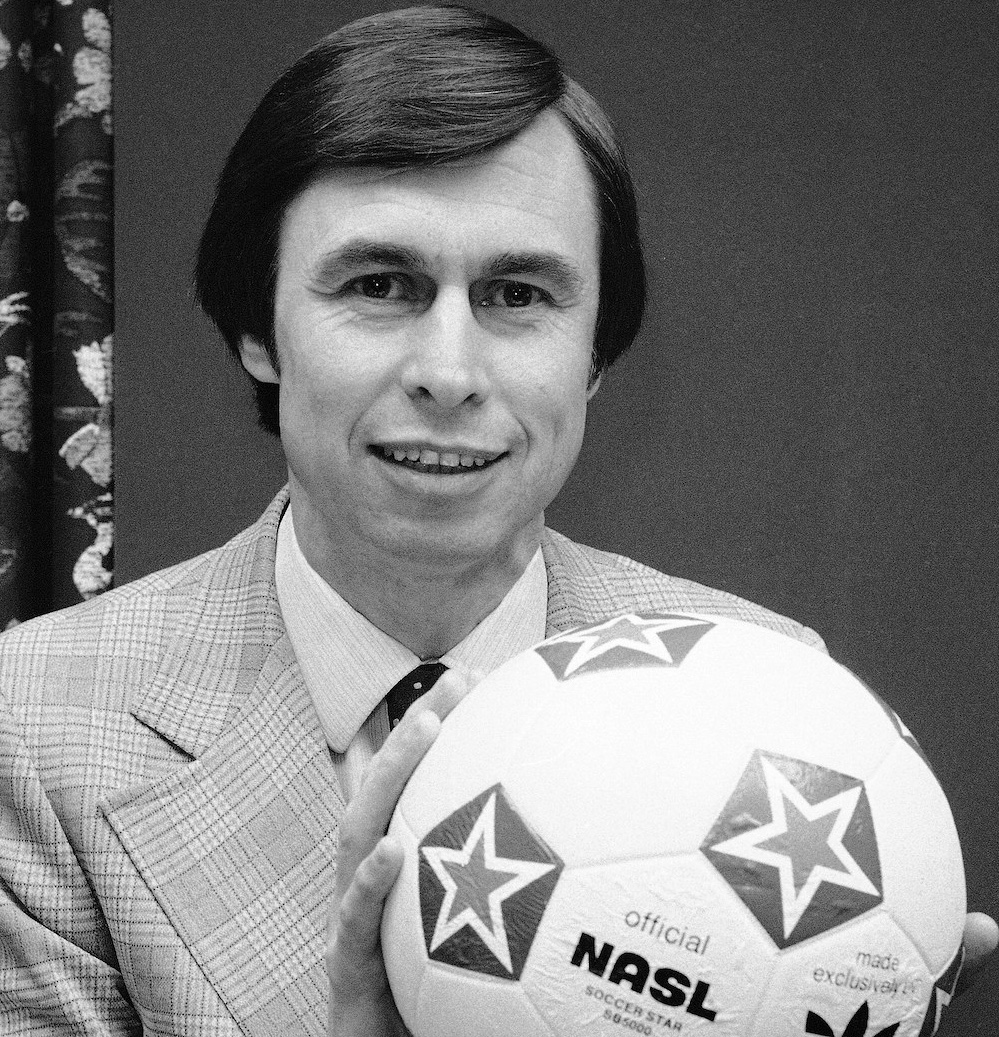
On the one hand he was clearly misled by his strong, unfaltering conviction about soccer’s intrinsic universal appeal: much of his rhetoric was visibly based on the expectation that if only the American public became familiar with the game, they would fall in love with it. In all evidence, he underestimated the numerous and complex causes for resistance to change in the landscape of American sports.
On the other hand, his discourse also reflects the ultimate belief of the salesman that his repetitive hyperbole possesses a performative function, which will turn his lofty visions into a self-fulfilling prophecy.[35]
While he failed to realize his great ambitions in the 1980s, he nevertheless bequeathed a lasting legacy to North American soccer. Not only did he contribute to setting a mind-blowing precedent in the short-lived, but truly spectacular popular success of the NASL, but he was also at the origin of a series of innovations that may not have turned soccer into a major American spectator sport in his time, but that have left an American imprint on the game itself.
While FIFA was not willing to listen to Woosnam’s arguments in favor of the famous 35-yard-line and a higher number of substitutions, they ended up, years later, tweaking the offside rule to make it more striker friendly as well as allowing five substitutes.[36] They also introduced an extra point for a win in order to encourage attacking football, another idea first implemented in Woosnam’s NASL. And while Woosnam’s honest plea to introduce advertisement breaks in order to increase badly needed revenues was refused, FIFA appears to have now let them in by the back door for the 2026 World Cup, in the guise of so-called “hydration breaks” midway through each half-time.
Finally, Woosnam, always progressive in his ideas (and therefore often clashing with more conservative hierarchies), was also an early promoter of women’s soccer, pointing out – twenty years before the US Women’s National Team won the World Cup at home – that considering soccer as a blue-collar male adult sport was “chauvinistic,” and that the game was wide open to girls and women. As far back as 1963, Woosnam had already delivered coaching training to young female teachers in Birmingham.
Cultural mediators and sport diplomats are visionaries by definition. Their engagement does not necessarily yield immediate tangible results. But even if they fail to reach their initial objective, they enable their followers to build on their experience, anticipate pitfalls and avoid mistakes. In this sense, the NASL under Phil Woosnam constitutes a precious, highly instructive, handbook.
Epilogue
Phil Woosnam remained close to his beloved football for the rest of his life. Though his work required him to be in New York for many weeks of the year, he always retained a home in Atlanta. He acquired US citizenship, created a marketing firm with a partner, contracting mainly with the US Soccer Federation.[37] In the 1990s, his outstanding work as commissioner was increasingly recognized. He was among 200 experts invited to a high-level “Strategic Soccer Summit” that took place in February 1993 in order to formulate a vision for soccer in the USA in 2005, and when the Olympic Games came to his city in 1996, he offered his services as venue manager for the Sanford stadium in Athens (roughly 100 km east Of Atlanta), where the men’s and women’s finals were played.[38] In 1997, he was inducted in the National Soccer Hall of Fame, in the aptly-named category of “builders”.
In his final years, Phil Woosnam developed Alzheimer’s disease and retired from public life. He died in 2013, at the age of 80, and was buried in Atlanta’s Arlington Memorial Park.
Phil Woosnam’s career ticks all the boxes of the “intentional”, self-conscious and mission-driven mediator in popular culture, as well as those of the impactful non-state-sporting-actor, especially in his interaction with FIFA.[39] A soccer diplomat between two worlds, he managed to created a synergy of two very different cultures. His ideas and visions were marked by his acculturation to the United States sport and business culture, but, as Paul Gardner recalls, “the intensity with which he poured them out … was his Welshness coming through. I saw it as an almost religious Welsh fervor and marveled at it.”[40]
He was right to marvel. Having strong roots in a very specific cultural upbringing does not mean one cannot successfully assimilate to a second culture, whatever the degree of difference, and benefit greatly from the journey. This is especially true in the realm of sport: it is precisely because sportspeople are keenly aware of the imprint of their own national culture that they are capable of developing empathy and building bridges with others. In bringing together sport diplomacy and cultural mediation, Phil Woosnam’s life and achievement constitute a remarkable embodiment for both concepts.
A version of this essay was first published in Football(s). Histoire, culture, économie, société, no. 8 (2026), p. 59-70.
Endnotes
[1] Doug Cress, “Hailing the Chiefs”, Soccer America, 11 October 1993, p. 35. (Full quote: “We were like missionaries, bringing soccer to a part of the world where it literally hadn’t existed.”)
[2] For those who wonder how this may be pronounced, the IPA transcription is [kɑːɨrˈsuːs].
[3] According to Dave Tossell, West Ham United in 1958 was “a club crackling with innovation, debate, and sharp footballing minds”, Playing for Uncle Sam. The Brits’ Story of the North American Soccer League, Edinburgh/New York, Mainstream Publishing, 2003, p. 39.
[4] Interview with former Wales goalkeeper Dave Hollins by Russell Todd, March 2025
[5] “Phil Woosnam: This is why I chose Villa”, Sports Argus, 24 November 1962.
[6] Birmingham Evening Mail, 28 October 1963
[7] Stuart Murray, Sports Diplomacy. Origins, Theory and Practice, Abingdon, Routledge, 2018, part III, p. 133-199. See also Stuart Murray and Geoffrey Allen Pigman, “Mapping the relationship between international sport and diplomacy”, Sport in Society, vol. 17/9, (2014), p. 1098-1118; J. Simon Rofe (ed.), Sport and Diplomacy. Games within games, Manchester University Press, 2019. A particularly interesting article in this context reveals the diplomatic potential of a global brand like Manchester United ; see J. Simon Rofe, “It is a squad game: Manchester United as a diplomatic non-state actor in international affairs”, Sport in Society, vol. 17, issue 9 (2014), p.1136-1154. See also, for a much less glamorous, but even more telling example, Gavin Price, “How the mixing of football, cultural relations and creative industries offers a powerful platform for sports diplomacy”, Sports Diplomacy Unwrapped, 4 October 2024, https://sportsdiplomacy.substack.com/p/how-the-mixing-of-football-cultural.
[8] Nancy Snow, “Rethinking public diplomacy in the 2020s”, in Snow, N., & Cull, N. J. (eds.), Routledge Handbook of Public Diplomacy, Abingdon, Routledge, 2020, p. 3-1; Shaun Riordan, “Dialogue-based Public Diplomacy: A New Foreign Policy Paradigm?”, in Jan Melissen (ed.), The New Public Diplomacy: Soft Power in International Relations, Basingstoke, Palgrave-Macmillan, 2005, p. 180-95.
[9] ISCA, based in Copenhagen, is one the European Union’s privileged sports policy interlocutors. For more information, see their dedicated “grassroots sports policy” website https://diplomacy.isca.org/. See also Rachel Payne and Mogens Kirkeby, “Grassroots Sports Diplomacy”, in J. Simon Rofe et al. (eds.), Routledge Handbook of Sports Diplomacy (forthcoming).
[10] Alan Tomlinson, “Diplomatic actors in the world of football”, in J. Simon Rofe (ed.), Sport and Diplomacy, op. cit., p. 47-69 (here: p. 63).
[11] Nicole Colin Corine Defrance, Ulrich Pfeil, Joachim Umlauf (eds.), Lexikon der deutsch-französischen Kulturbeziehungen seit 1945, Tübingen, Narr, 2013.
[12] Dietmar Hüser and Ulrich Pfeil, “Populärkulturelle Mittler und deutsch-französisches Verhältnis nach 1945. Spannungsfelder und Forschungsperspektiven transnationaler Populärkultur”, in Populärkultur und deutsch-französische Mittler. Akteure, Medien, Ausdrucksformen, Bielefeld, transcript, 2015, p. 15-50.
[13] See the research of Philipp Didion on post-war French-German football encounters, for instance “Political Emotions in the Post War Stadium. A Franco-German Perspective on the 1950s and Early 1960s“, in Basak Alpan, Alrecht Sonntag and Katarzina Herd (eds), The Political Football Stadium. Identity Discourses and Power Struggles, Cham, Springer/Palgrave Macmillan, 2023, p. 83-103.
[14] Hüser and Pfeil, op.cit., p. 29.
[15] Ibid., p. 35.
[16] The National Professional Soccer League (NPSL) was one of two rival professional leagues in 1967, before merging in 1968 with its competitor, the United Soccer Association (USA), to become the NASL; Interview with Phil Woosman, broadcast by WBS-TV on 1 March 1967. (Source : Walter J. Brown media archives, University of Georgia).
[17] David Wangerin, Soccer in a Football World, Philadelphia, Temple University Press, p. 128.
[18] Interview with former club secretary Renny Lloyd by Russell Todd, May 2025.
[19] Interview with Vic Rouse, former Wales and Atlanta Chiefs goalkeeper, by Russell Todd, July 2025.
[20] Paolo Freire, Pedagogy of the Oppressed, London, Penguin, 1996 (Published in Portuguese in 1968); Ian Plenderleith, Rock’n’Roll Soccer, New York, Thomas Dunne Books, 2014, p. 34.
[21] Phil Woosnam, with Paul Gardner, Sports Illustrated Soccer, Philadelphia and New York, J.B. Lippincott, 1972.
[22] Tone and style of the book are very similar to the photo series “The Woosnam Way” that was featured in the Birmingham newspaper The Sports Argus every week during the season while he was at Aston Villa.
[23] Ibid.
[24] While such a position does not exist in Europe, recent developments of concentration and lack of competitive balance have led some observers to regret the absence of an official defender of the common interest. See, for instance, Rory Smith, “The Premier League Needs a Commissioner”, The New York Times, 24 November, 2023.
[25] Lawrie Mifflin, “N.A.S.L. Is Likely to Oust Woosnam”, The New York Times, 25 April 1982.
[26] Woosnam later repeatedly pointed out that the owners had voted in favour of the expansion to 24 teams, the aim of which was mainly to raise interest with nation-wide television.
[27] Andrei Markovits & Steve Hellerman, Im Abseits. Fußball in der amerikanischen Sportkultur, Hamburger Edition, 2002, chapter 2.
[28] Hal Phillips, Generation Zero: Founding Fathers, Hidden Histories & the Making of Soccer in America, Nantucket, Dickinson-Moses Press, 2022.
[29] Ibid.
[30] Ross Atkin, “Pro soccer may soon score big as an American sport”, The Christian Science Monitor, 18 September 1980.
[31] Clive Gammon, “Nothing But Blue Skies Does Woosnam See”, Sports Illustrated, 30 May 1977. In the memoirs of Canadian international Bob Lenarduzzi, these particular attributes were summed up in a sigh: “Geez, that man just wouldn’t shut up.” (A Canadian Soccer Story, with Jim Taylor, Madeira Park, BC, Harbour Publishing, 2011).
[32] David Wangerin, op. cit., p.141; Interview with Dick Cecil, who repeatedly referred to Woosnam as his “best-ever signing”, quoted in Ian Plenderleith, op. cit., p. 230; Richard Williams, “Phil Woosnam: From West Ham and Villa to realising the American dream”, The Guardian, 26 July 2013; anon., “Phil Woosnam”, The Times, 24 July 2013.
[33] Ian Plenderleith, op. cit., various passages.
[34] Ross Atkin, op. cit.
[35] Interestingly, he even spoke in very similar terms three years before arriving in Atlanta. Upon being linked with the Director of US Coaching in the English press, he responded, “It represents a tremendous challenge, for North America is the one continent where the game is not yet fully caught on [but] when they do get going, they will progress very fast.” (Birmingham Evening Mail, 9 November 1963.).
[36] See the section “The objects of football” in this issue.
[37] Paul Gardner, “TV, World Cup Soccer and the American Way”, The New York Times, 24 October 1989. See also Doug Cress “Phil Woosnam” (Interview), Soccer America, 12 February 1996, p. 25.
[38] Paul Kennedy, “Buying into the Process”, Soccer America, 22 February 1993, p. 23.
[39] A closer look at his correspondence and collaboration with Henry Kissinger, especially around the doomed bid for hosting the 1986 World Cup, would be worth a chapter on its own.
[40] Quoted in anon., “Phil Woosnam”, The Times, 24 July 2013.